
How burnout quietly changed my leadership, and what it took to recognize the damage.
By Jason Bissell | Faith on Duty
I remember working under a sergeant who had clearly lost his passion for the job. He was burned out, disengaged, and emotionally absent. As a young supervisor, I struggled to understand how someone in a leadership position could become so disconnected from the people depending on him.
I resented him. There were days when I actually preferred that he wasn’t at work. I felt like things ran better without him, and I couldn’t understand why he seemed so unwilling to engage with the people he was supposed to be leading. I remember thinking that if I ever reached that point in my career, I would do things differently. I wouldn’t become that kind of leader.
Years later, I found myself confronting a reality I never expected.
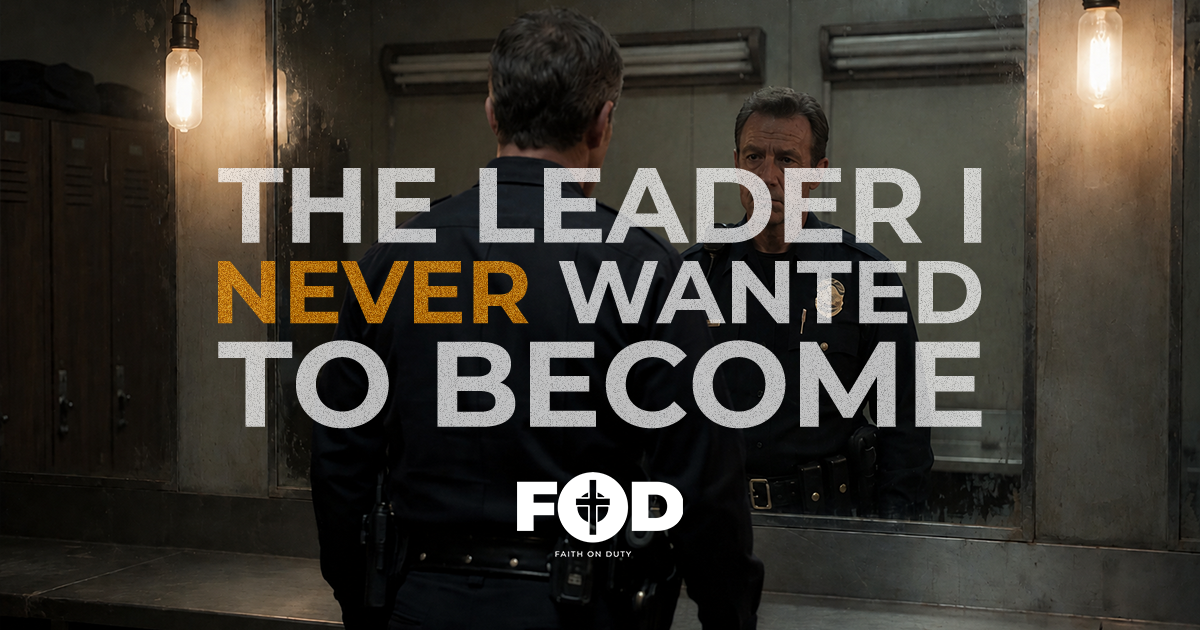
I had become the very person I once resented.
It didn’t happen overnight. There wasn’t a particular incident or defining moment that changed everything. It happened gradually, through the accumulation of stress, frustration, exhaustion, and circumstances I wasn’t dealing with. For a long time, I didn’t recognize what was happening.
The Changes We Don’t Notice
One of the things I’ve learned about burnout is that it doesn’t always look the way we expect. We tend to associate it with someone reaching a breaking point, someone who can no longer function effectively, who is visibly overwhelmed, or who finally admits they can’t continue. But sometimes burnout looks remarkably ordinary.
You still come to work, answer calls, make decisions, and handle your responsibilities. From the outside, there may be little indication that anything is wrong. The changes are subtle, and they’re often easy to dismiss. You become less patient. Conversations that once felt worthwhile become interruptions, and things that never bothered you suddenly become sources of frustration.
You start distancing yourself from people without necessarily understanding why. Eventually, the work that once gave you a sense of purpose becomes something you simply endure. You convince yourself that you’re just having a difficult week or that things will improve when the workload slows down. Before long, that temporary frustration becomes your normal way of operating.
That’s where I found myself. After the sergeant I mentioned retired, I began struggling with my own mental health. I let those struggles affect my engagement with my job and the people around me. I started calling in more frequently, became emotionally disconnected, and slowly lost my enthusiasm for leadership.
I was still a supervisor. I still held the rank and carried the responsibilities, but I wasn’t leading the way I should have been. Looking back, I can recognize the warning signs. At the time, I was too caught up in everything I was carrying to see them.
That’s what makes burnout so dangerous. Sometimes we don’t realize how much we’ve changed until we become someone we never intended to be.
The Weight Doesn’t Stay With Us
Leadership comes with responsibilities that aren’t always obvious to people watching from the outside. There are difficult decisions, constant expectations, and the responsibility of answering for someone else’s mistakes while managing your own. Then there’s everything we carry from the job itself.
There are calls that stay with us, situations we replay, and stress we’ve convinced ourselves we’ve learned to manage because we don’t have time to deal with it any other way. Most first responders understand that weight, regardless of the uniform they wear or the role they serve. But there’s another part of it we don’t always consider: What happens when the weight we’re carrying begins affecting the people around us?
I think this is where leadership becomes particularly complicated. We can convince ourselves that our struggles are personal, that we’re handling them privately, and that as long as the job gets done, nobody else is affected. The problem is that our people often notice more than we realize.
They recognize when our patience is gone and when we’ve become less approachable. They can tell when we’re physically present but mentally somewhere else. Over time, our behavior begins influencing theirs. A frustrated leader can create a frustrated team, while a disengaged supervisor can unintentionally teach others that disengagement is acceptable.
These things don’t happen through policies or formal instructions. They happen through the examples we set every day. I had spent years criticizing a supervisor for his absence and lack of engagement, only to find myself demonstrating many of those same characteristics.
It forced me to consider something I hadn’t fully appreciated before. We don’t just carry the weight of this profession. Sometimes we pass it on to the people who depend on us.
When we aren’t paying attention, we can make an already difficult job even harder for those we’re supposed to be leading.
Looking in the Mirror
Recognizing that I had become the kind of supervisor I once resented wasn’t particularly comfortable. I could have justified my behavior, and there were certainly circumstances contributing to it. The stress was real. The mental health struggles were real. The exhaustion and frustration weren’t things I had imagined.
But understanding why something is happening doesn’t necessarily excuse what we allow it to become. That’s a distinction I had to learn. I couldn’t control every circumstance affecting my life or career, but I did have a responsibility to recognize how those circumstances were influencing my leadership.
Recognizing the problem was only the beginning. I had to become intentional about how I showed up, which meant making an effort to engage with my officers rather than distance myself from them. I had to pay attention to my reactions, become more approachable, and recognize that my people needed more from me than someone who could simply make decisions.
I also had to accept that trust doesn’t automatically return because we decide to start doing things differently. People remember how we’ve treated them. They remember the conversations we dismissed, the frustration we directed toward them, and the times we weren’t available when they needed us. Rebuilding those relationships requires consistency, and that consistency has to become part of how we lead rather than something we demonstrate when it’s convenient.
As I began changing my approach to leadership, I started noticing a difference. The attitudes of my younger officers improved, they became more engaged, and the relationships between us began to change. They were working with me, not just for me.
That experience changed my understanding of leadership. It reminded me that having authority over people doesn’t necessarily mean we’re having a positive influence on them. Sometimes the greatest obstacle to becoming a better leader is our unwillingness to acknowledge that we’re part of the problem.
When Purpose Becomes Survival
There was a period in my career when I found myself praying for a way out of law enforcement. I felt stuck. I had convinced myself that I didn’t have many alternatives, and I was beginning to view retirement as the finish line rather than focusing on the opportunities I still had to make a difference.
That’s a difficult place to find yourself when you’ve spent much of your life believing in the purpose of your profession. I’ve always considered law enforcement a calling. Not everyone shares that perspective, and I understand that. But for me, this profession has always represented an opportunity to serve something greater than myself.
Somewhere along the way, I had allowed the pressures of the job to overshadow that purpose. I was no longer asking how I could make the most of the responsibility I’d been given. Instead, I was wondering how much longer I could endure it. There’s a difference, and I think that difference matters, especially for those of us who approach our work through the lens of faith.
Galatians 6:9 encourages us not to grow weary in doing good. I’ve thought about that passage differently as I’ve gotten older. For years, I associated perseverance with simply pushing through whatever came my way, continuing to work, continuing to serve, and refusing to acknowledge when things were taking a toll.
But perseverance doesn’t require us to ignore our limitations. It doesn’t mean pretending we’re unaffected by the things we experience, and faith doesn’t somehow make us immune to exhaustion, depression, anxiety, or the cumulative effects of a difficult profession.
Sometimes faith requires us to confront things we’d rather avoid. That might mean acknowledging that we need help, recognizing when our priorities have shifted, or admitting that the person we’ve become doesn’t reflect the purpose we once believed in so strongly.
I don’t believe there’s anything dishonorable about struggling. But I do believe we have a responsibility to recognize when those struggles are beginning to affect how we treat the people around us, especially when we’ve been entrusted with leading them.
The Example That Remains
I’ve spent more than two decades in law enforcement, and I’ve had the opportunity to work alongside some exceptional people. I’ve learned from supervisors who demonstrated patience, humility, and a genuine commitment to the people they led. I’ve also learned from leaders whose examples showed me what I didn’t want to become.
What took me longer to understand was that the people working under me were having those same experiences. They were developing their own perspectives on leadership through the examples I was giving them. Some of those examples were good, and others weren’t. That’s something I have to own.
We spend a tremendous amount of time preparing first responders to handle the responsibilities of their professions. We train them to make decisions, manage difficult situations, and respond effectively when things go wrong. But I wonder how often we encourage those responsible for leading them to examine how their own experiences are affecting them.
How often do we ask ourselves whether we’re becoming more patient or more cynical? Are we becoming more approachable or more distant? Are we genuinely invested in our people, or have we simply become more comfortable exercising authority over them?
Those questions matter because leadership doesn’t exist independently of the person doing the leading. Our character, attitudes, struggles, and experiences eventually become part of the environment we’re creating. Whether we intend to or not, we leave pieces of ourselves in the people we’ve influenced.
That’s a responsibility I understand differently today than I did when I first promoted. I can’t go back and change the seasons when I wasn’t the leader my officers deserved. I can’t undo every missed opportunity or every moment when frustration affected my judgment, but I can recognize those failures and allow them to influence how I lead moving forward.
Perhaps that’s one of the most important lessons experience has taught me. Becoming a better leader sometimes begins with accepting that you’ve been a poor example. Not because that admission defines who you are, but because refusing to acknowledge it can determine who you eventually become.
What We Leave Behind
At some point, every one of us will answer our last call. We’ll work our final shift, turn in our equipment, and walk away from responsibilities that once occupied so much of our lives. The work will continue, and someone else will make the decisions, answer the questions, and carry the responsibilities we once believed couldn’t function without us.
But our influence doesn’t necessarily end when our careers do. It continues through the people we trained, the relationships we built, and the examples we left behind. Some of those people will eventually become leaders themselves, and when they do, I wonder what parts of our leadership they’ll carry forward.
Will they remember someone who made an already difficult profession harder, or someone who understood the weight of the job and tried not to add unnecessarily to it?
I know what I would want my answer to be. I also know I haven’t always lived up to it.
The leader I never wanted to become taught me something I might not have learned any other way. That experience forced me to recognize the difference between holding a leadership position and genuinely leading people. It reminded me that burnout doesn’t just affect our ability to do the job. Left unaddressed, it can influence how others experience the profession itself.
It also reinforced something I hope I never forget.
The people we lead shouldn’t have to carry the weight of what we refuse to confront in ourselves.
I can’t change the leader I was during that season of my career, but I can take responsibility for the leader I choose to become. Perhaps, in the end, that decision will matter far more than the rank I held or the number of years I served.
A Note From the Author
This reflection grew from experiences I share in my book, After the Call: Leading Through Stress, Weight, and What Comes Next.
The book explores the pressures of first-responder leadership, the cumulative effects of stress, burnout, identity, and the responsibility we have to recognize what we’re carrying before we pass that weight on to others.
I didn’t write it because I’ve mastered those challenges. I wrote it because I’ve experienced them and learned some lessons later than I should have.
I hope that sharing those experiences might help someone else recognize the warning signs sooner.
Explore After the Call on Faith on Duty.
Leave a Reply